

IMO Advances Zero Plastic Pollution From Ships By 2030
The International Maritime Organization (IMO) is ramping up its fight against plastic pollution from ships, with its Sub-Committee on Pollution Prevention and Response finalizing a draft 2026 .
This was disclosed during the Strategy and Action Plan at the 13th session (PPR 13) in London, February 9-13, 2026.
This updated plan, set for adoption by the Marine Environment Protection Committee (MEPC 84) in April-May 2026, replaces earlier 2021 and 2025 strategies.
IMO says It targets zero plastic waste discharges to sea from ships by 2030, including fishing vessels, through three main pillars:
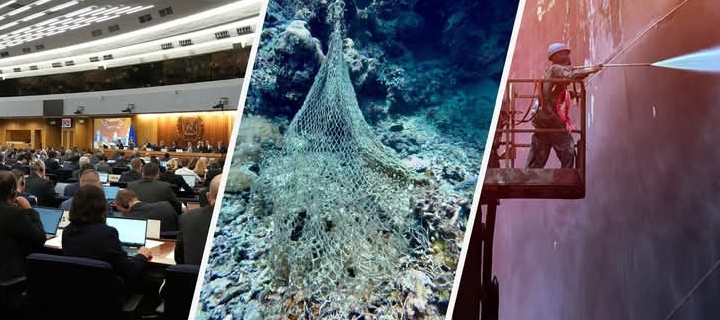
The International Maritime Organisation Secretary-General , Mr. Arsenio Dominguez opens the 13th session of the Sub-Committee on Pollution Prevention and Response, which was chaired by Dr. Anita Mäkinen of Finland (right).
The International Maritime Organization’s Sub-Committee on Pollution Prevention and Response has agreed on a draft updated strategy and action plan to tackle plastic pollution from ships, including fishing vessels.
Meeting at IMO Headquarters in London from 9 to 13 February 2026 for its 13th session (PPR 13), the Sub-Committee finalized the draft 2026 Strategy and Action Plan to Address Marine Plastic Litter from Ships, to be submitted for adoption by the Marine Environment Protection Committee (MEPC 84) when it convenes from 27 April to 1 May 2026.

Cutting shipping’s contribution to ocean litter
Once adopted, the 2026 Strategy and Action Plan will supersede IMO’s 2021 marine plastics strategy and 2025 action plan, bringing them together in a single, streamlined approach while reaffirming the Organization’s ambition to achieve zero plastic waste discharges to sea from ships by 2030.
The updated Strategy and Action Plan will focus on:
Reducing shipping’s contribution to ocean plastic pollution;
Improving the effectiveness of port reception facilities and ship waste processing; and
Strengthening international regulations and compliance.
Actions will also boost seafarer training, public awareness and regulatory knowledge, as well as strengthen technical cooperation and capacity-building for Member States.
Action on pellets and fishing gear
In addition, the Sub-Committee advanced more targeted workstreams addressing marine litter from ships:
The Sub-Committee examined legal pathways to reduce environmental risks from pellets transported in freight containers, which can affect the environment when spills occur at sea or in ports.
It recommended that MEPC 84 consider developing a new code to regulate the maritime transport of plastic pellets in freight containers, to be made mandatory under MARPOL Annex III and/or SOLAS Conventions.
To combat abandoned, lost or otherwise discarded fishing gear, which remains a significant source of ocean plastic pollution, the Sub-Committee approved a draft circular promoting the implementation of fishing-gear marking systems and the FAO Voluntary Guidelines on Marking of Fishing Gear. This will be submitted for approval to MEPC 84.
The Voluntary Guidelines on Marking of Fishing Gear aim to facilitate the reporting, recovery and disposal of such gear, and includes as supplementary documents:
Comments are closed.