

EXCLUSIVE: Nigeria’s Trawler Owners Grind 85% Fleet Over High Cost Of AGO.
By Roland Ekama
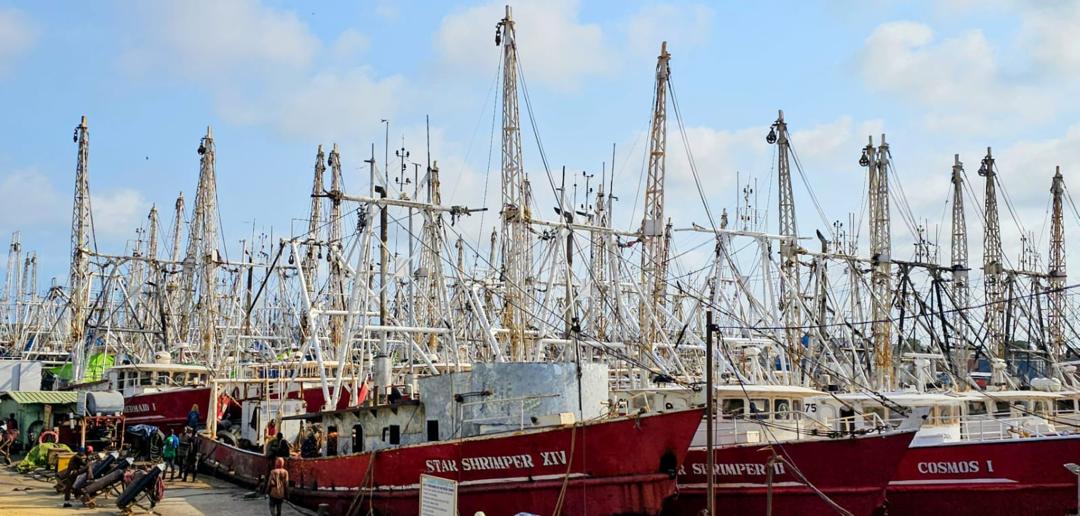
Trawler operations across Nigeria are crumbling under the weight of skyrocketing diesel prices, with 85% of fishing companies closing shops.
The crisis stems from the high cost of Automated Gas Oil (AGO), commonly known as diesel for marine engines, exacerbated by the ongoing geopolitical tensions involving Iran, the US, and Israel.
Investigations by DailyFocus Nigeria revealed that at least one major fishing company—name withheld—has completely grounded its trawlers due to unsustainable maintenance expenses.
Sources within the industry confirmed that operational vessels are now idle at terminals, leading to widespread layoffs among seafarers.
Many workers have been forced to stay at home while some have been forced to proceed on long leave without paying, our correspondent confirmed recently.
Industry insiders attribute the sharp decline directly to the Iran-US-Israel conflict, which has disrupted global oil supplies and driven diesel prices to record highs. In Nigeria, where fuel subsidies were removed in 2023 by the Bola Ahmed Tinubu led government, the ripple effects have hit the maritime sector hardest.
Nigeria’s industrial fishing fleet, once a powerhouse contributing over 1 million metric tons of seafood annually, now faces existential threats. The sector employs tens of thousands, particularly in coastal states like Lagos, Delta, and Bayelsa, making the downsizing a humanitarian concern.
Economic data underscores the severity: diesel prices have surged 150% since early 2026, from ₦1,200 per liter to over ₦3,000, according to the Nigerian Midstream and Downstream Petroleum Regulatory Authority (NMDPRA).
Trawler operators, who consume thousands of liters per voyage, report daily fuel costs exceeding vessel earnings.
One anonymous captain from a Lagos-based fishing firm shared, “We can’t afford to sail. A single 10-day trip burns 20,000 liters of diesel—now costing ₦60 million. We’re starving on land while fish rot in the sea.” His crew of 25 was laid off recently.

The crisis extends beyond fuel. Maintenance costs for trawlers, including engine overhauls and hull repairs, have doubled due to imported parts priced in dollars amid naira devaluation. Local shipyards in Apapa report a 70% drop in repair jobs as owners prioritize survival over fixes.
Government response has been muted so far. The Federal Ministry of Marine and Blue Economy had promised diesel subsidies for fishermen in February but has yet to disburse funds, citing budget constraints.
Critics argue this inaction echoes the 2023 fuel subsidy removal fallout.
Historically, Nigeria’s trawler industry boomed in the 1980s with over 200 vessels, but overfishing, piracy, and fuel volatility have eroded it to fewer than 100 active trawlers today. The current diesel crunch could wipe out half the fleet permanently.
Small-scale artisanal fishers, who dominate 80% of Nigeria’s $1.5 billion fisheries sector, are somewhat insulated—they use paddle canoes and minimal fuel. But they warn of supply gluts as industrial trawlers offload unsold catches cheaply, crashing local prices.
Environmental advocates see a silver lining. Groups like GreenPeace Nigeria note that idled trawlers reduce illegal, unreported, and unregulated (IUU) fishing, which has depleted stocks like croaker and shrimps in the Gulf of Guinea. “This pause lets oceans recover,” one expert said.
However, food security experts disagree. With Nigeria importing 2.4 million metric tons of fish yearly to meet demand, the trawler shutdown risks inflation in protein prices. Smoked fish, a staple in markets from Kano to Calabar, has already jumped 40% in cost.
Alternative energy trials offer hope. A pilot project by the Nigerian Maritime Administration and Safety Agency (NIMASA) tests biofuel blends for trawlers, reducing diesel reliance by 30%. Solar-powered auxiliary engines are also gaining traction among mid-sized operators.
Internationally, similar woes plague African peers. Ghana’s tuna fleet downsized 60% last month for the same reasons, while Senegal subsidizes fuel to keep boats afloat. Nigeria could learn from Morocco’s wind-assisted trawling innovations.
Looking ahead, analysts predict recovery only if global oil stabilizes or local refining ramps up. The Dangote Refinery, now at 70% capacity, could flood the market with cheaper diesel by Q3 2026—but delays persist.
In the Niger Delta, communities dependent on trawler offloading face ghost towns at jetties. Women processors, who handle 60% of post-harvest work, report halved incomes. “No fish, no food,” lamented a Port Harcourt vendor.
As Iran-US-Israel flares risk escalating,
Nigeria’s government eyes strategic reserves and diplomatic pushes for oil stability. For now, the sea lies quiet, and livelihoods hang in the balance.
Comments are closed.