

AT JOURNALNG TOWNHALL: Green Fleets, NSW , Voices Demand Action For Smart Nigerian Ports
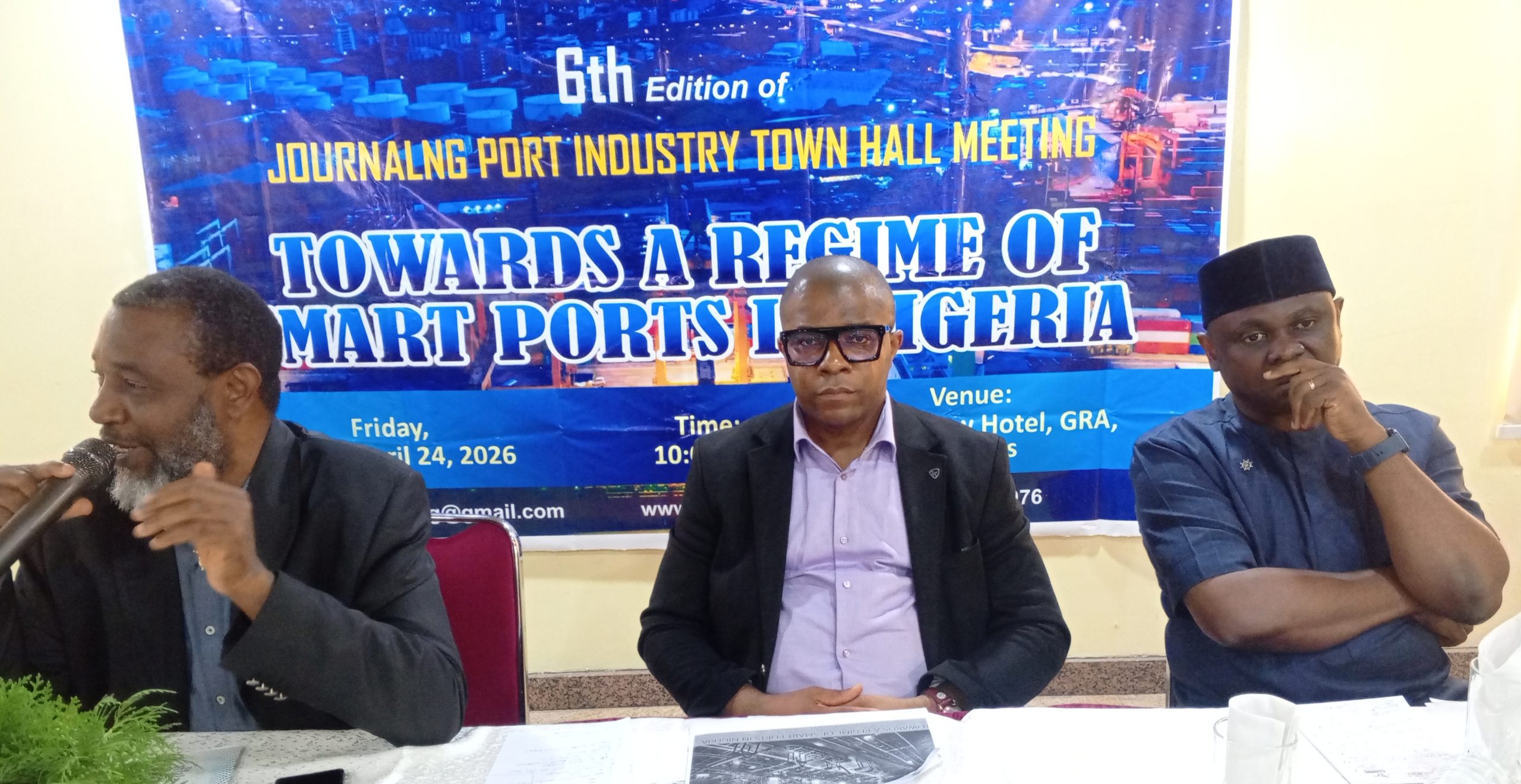
Roland Ekama , witnessed the 6th edition Town Hall meeting put together by JournalNG in Lagos on Friday where critical stakeholders from the formal and informal sectors of the maritime industry X-rayed the possibilities for Nigeria to achieve smart ports and green port status. Here is the meaty highpoints of the brainstorming session.
In the bustling heart of Apapa, Lagos, where container ships tower like steel giants and trucks snake through endless congestion, a clarion call echoed on April 24, 2026. At the 6th JournalNG Port Industry Town Hall Meeting—theme: “Towards a Regime of Smart Ports in Nigeria”—industry leaders didn’t mince words. Nigeria’s ports, gateways to 70-80% of West and Central Africa’s cargo, are choking on outdated manual processes, crippling logistics costs at 30-40% of trade expenses (far above the global 8-12% average), and cargo dwell times stretching 18-24 days versus 3-8 in digitized hubs like Singapore or Rotterdam.
But smart ports—powered by AI, IoT, blockchain, and automation—could flip the script, slashing operational costs by 14%, boosting efficiency by 60%, and catapulting Nigeria’s trade competitiveness.
Kingsley Igwe, Registrar of the Council for the Regulation of Freight Forwarding in Nigeria (CRFFN), delivered the keynote with data-driven fire. “Global statistics prove smart ports reduce costs by 14% in ideal environments,” he declared.
Drawing from his dual lens as practitioner and regulator, Igwe envisioned Nigeria reaping even bigger wins: 14% off total port and logistics bills, 60% efficiency gains—especially by tackling personnel costs that gobble 60-70% of budgets.
He added that “Smart ports are technology-driven environments using automated systems, data analytics, AI, and integrated infrastructure to ditch manual drudgery,” he explained. No more delays from limited hours; round-the-clock ops would slash vessel wait times, predict cargo flows, and trim storage fees. The payoff? Higher Logistics Performance Index rankings, less congestion, and fatter national revenues.
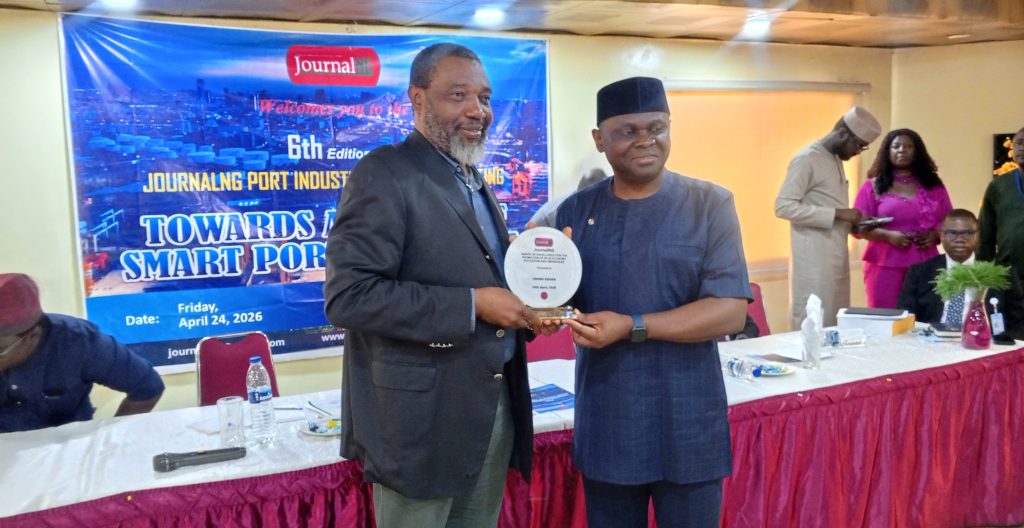
Eugene Nweke, Head of Research at the Sea Empowerment and Research Center (SEREC), set the tone in opening remarks, labeling smart ports “urgent, inevitable, and foundational.” Citing UNCTAD data—80% of global trade sails by sea—he warned Nigeria risks a widening gap without digital leaps.
Eugene a former President , National Association of Government Approved Freight Forwarders NAGAFF noted that that “Leading ports cut vessel turnaround by 30-50% via automation and real-time data,”

Nweke said, spotlighting Rotterdam and Singapore. Locally, he hammered home the pain: inefficiencies leak revenue and inflate costs. His blueprint? Three pillars—digital infrastructure like the National Single Window (NSW), AI/IoT automation, and skilled workers.
According to him, “Smart ports require smart people,” he stressed. “NSW isn’t a reform; it’s a national economic necessity,” promising 50% faster clearances and investor trust.”
Rear Admiral Thaddeus Udofia (Rtd.), Director General of the International Maritime Institute of Nigeria (IMION), represented by Captain David Ajiboye, urged immediate action. “Ports with digital systems boost efficiency 30% and cut logistics 25%; Nigeria can’t lag,” he said.
” Apapa and Tin Can Island grind under congestion, but Lekki Deep Sea Port hints at potential. Udofia pushed pilot projects there, harmonized regs, and workforce training—benchmarking against Singapore or Tanger Med. “Data is the lifeblood of modern ports,” he noted, calling for a “whole-of-industry” push to lower business costs and fuel development.
From Nigeria Customs Service (NCS), Tin Can Island’s PRO Oscar Ivara, standing in for Comptroller Frank Onyeka, shared progress: 90% automation via B’Odogwu platform, SMART Customs (security, measurement, automation, risk, tech), AEO programs, and satellite borders.
“These optimize clearance, secure borders, and back smart ports,” Ivara said.
Convener Ismail Aniemu, JournalNG Publisher, dismissed job-loss fears. “Smart ports create jobs for smart people—robotics and AI limit human bottlenecks but spawn specialized roles,” he assured. Nigerian pros, he added, shine globally:
Aniemu who is a former President”, Association of Maritime Journalists of Nigeria AMJON pointed out that”Our maritime scholars can excel anywhere.” He nodded to 24/7 readiness—banks operate anytime; agencies like Customs and NAFDAC could too.
Voices from the high table amplified the chorus, even as Captain Iheanacho Ebubeogu, ex-NPA General Manager and Master Mariner, urged truckers toward green corporate fleets, NPA-Customs to drive NSW for 24-hour ops, and deeds over words. School of Eloquence Founder pushed telecoms and power firms into the mix.
Nigeria isn’t starting from zero—strategic location, growing infrastructure, private players. Yet as Nweke warned, modernization is “non-negotiable” to unlock the blue economy. The town hall wasn’t rhetoric; it was a roadmap. With collaboration, Nigeria’s ports could evolve from bottlenecks to engines of prosperity.
Comments are closed.