

The Federal Road Safety Corps (FRSC) and the Sierra Leone Road Safety Authority (SLRSA) have deepened regional cooperation with a landmark five‑year Memorandum of Understanding (MoU) aimed at improving road safety across the West Africa corridor.
Signed at the FRSC National Headquarters in Abuja, the agreement establishes a framework for coordinated action, knowledge exchange and joint capacity building across the ECOWAS sub‑region.
According to a statement signed by :Deputy Corps Commander, Corps Public Education OfficerFederal Road Safety Corps
Osondu Ohaeri on Friday, 3 July, 2026., the MoU commits both agencies to collaborative initiatives in data‑driven road safety management, research, vehicle administration and enforcement, targeting reductions in road traffic fatalities and faster progress toward the Sustainable Development Goals across cross‑border routes linking Nigeria, Sierra Leone and neighbouring states.

SLRSA Executive Director James Bagie Bio called the partnership “a defining moment” and praised the FRSC’s operational excellence and technological advances under Corps Marshal Shehu Mohammed.
He said the Sierra Leone delegation left Nigeria inspired and pledged that the MoU “will not gather dust on the shelf,” promising immediate, structured implementation, institutional engagement and periodic progress reviews to deliver measurable improvements along the West Africa corridor.
Major General (Rtd.) Dauda Alpha, Deputy High Commissioner of Sierra Leone to Nigeria and Deputy Head of Mission to ECOWAS, described the agreement as a strategic bridge to strengthen regional integration and collective action to protect road users across ECOWAS. He credited the FRSC’s transformation for positioning it as a continental reference point in road safety administration.
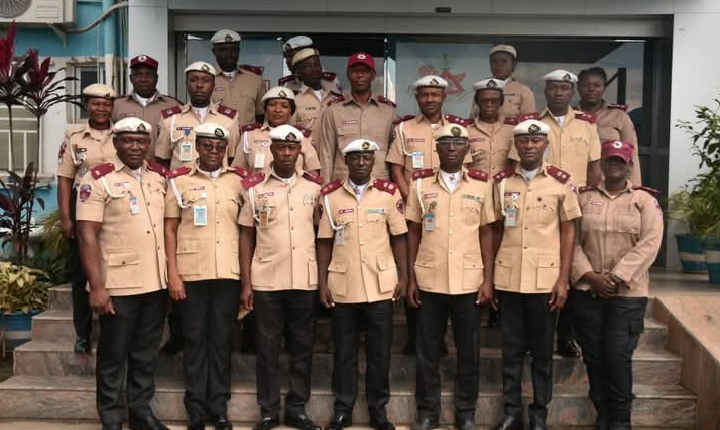
The partnership marks a milestone in ongoing FRSC efforts to expand international cooperation and position the Corps as a leading road safety institution in Africa. With the agreement now in force, both organisations will pursue joint programmes, training, data sharing and enforcement collaboration to improve safety and mobility along key cross‑border corridors in West Africa.