

Logistics Sector’s Failures Cost Nigeria N5tn Annually, Stakeholders Say Urgent Reforms Needed
By Victor Ijezie
Nigeria loses an estimated N5 trillion each year to logistics failures, industry leaders warned on Thursday, arguing that improved logistics could transform the economy by cutting waste, lowering inflation and boosting trade and jobs.
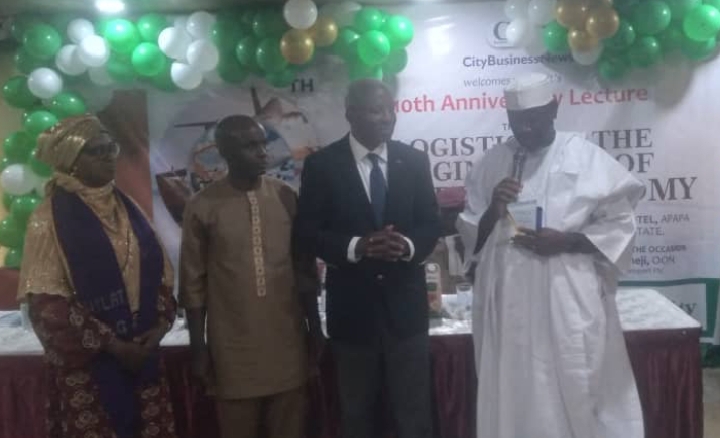
The warning came at the 10th Anniversary Lecture of City Business News in Lagos, themed “Logistics as the Engine Room of Nigeria’s Economy,” where logistics professionals, transport operators and regulators laid out the scale of the problem and concrete fixes.
Scale of the loss
Dr. Boboye Oyeyemi, President of the Chartered Institute of Logistics and Transport (CILT) and former Federal Road Safety Corps (FRSC), Corps Marshal, said post-harvest losses of 30–40 million tonnes translate to $2.3–$3.3 billion (about N3.5–N5 trillion) yearly. “Our logistics inefficiencies are bleeding farmers and consumers,” he said.
Oyeyemi noted that despite its importance, the sector contributes only 3.73% to GDP—a figure he called “artificially low” because structural barriers prevent the sector from scaling.
Stakeholders’ diagnoses and voices
Infrastructure and overloading: “The Middle Belt is the food basket,” Oyeyemi said. “To move goods from the Middle Belt to Lagos, about 40% rot away.” He blamed poor roads and the lack of functioning weighbridges that allow overloading and accelerate road damage.

Oyeyemi and other speakers described widespread illegal payments at checkpoints. Transport operators reportedly pay between N150,000 and N250,000 per trip in such unofficial levies. Rising diesel prices further inflate costs.
Industry participants further urged harmonised policy. “We need a coordinating minister to align rail, road and port policy,” Oyeyemi said, calling for a unified approach to planning and investment.
Sir Frank Nneji, founder of ABC Transport Plc, criticised decades of neglect for road transport. “Aviation gets attention and funds; road users get potholes and insecurity,” he said, urging the government to concession major roads and invite private investment.
Against the backdrop of safety and enforcement, Shehu Mohammed, Corps Marshal of the Federal Road Safety Corps (FRSC), pledged stepped-up enforcement and public education to protect lives and goods in transit. “We will intensify partnerships and campaigns to reduce crashes and improve safe movement of goods,” he said.
Mrs. Khadijat Sheidu-Sabi of Women in Logistics and Transport (WiLAT), represented by CILT member Mrs. Fatima Jatto (NPA), stressed women’s growing leadership in logistics.
“Inclusion and empowerment of women must remain a priority,” she said, linking gender diversity to sector resilience.
Recommendations from stakeholders
Eliminate illegal checkpoints and enforce the rule of law to cut transit costs and reduce delays.