

Container Peak Season Arrives Early As Freight Rates Skyrocket
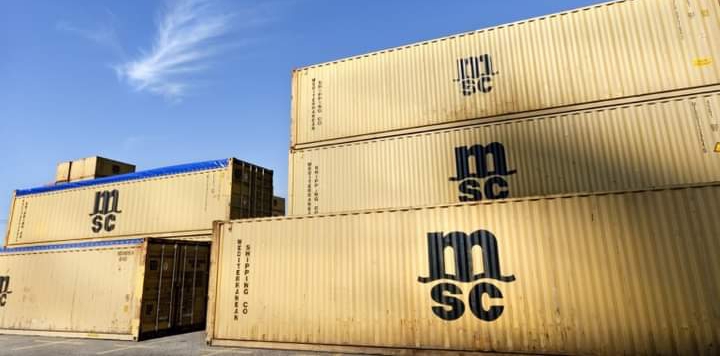
Container freight rates surged abruptly in early June as an earlier-than-usual peak season, carrier surcharges and constrained vessel availability combined to push global FEU prices sharply higher.
The Drewry World Container Index (WCI) jumped 23% to $3,433 per FEU on 4 June, up from $2,800 a week earlier, reflecting strong upward pressure across both Transpacific and Asia–Europe trades.
Drewry said multiple market sources confirmed this year’s peak season began sooner than normal, driving accelerated bookings and stronger demand that are supporting higher headline rates. The Transpacific lane saw particularly steep moves: Shanghai–Los Angeles climbed 31% week‑on‑week to $4,565 per FEU. Asia–Europe also tightened materially, with Shanghai–Rotterdam up 25% week‑on‑week to $3,579 per FEU.
Those moves tracked broader spot-index gains: the Shanghai Containerized Freight Index (SCFI) rose 16% to 2,571.73 on 29 May and then another 6% to 2,726.48 on 5 June, a sequence that often leads WCI changes by about a week.
Carriers have supplemented market tightness with a wave of peak season surcharges and general rate increases. On Transpacific routes, carriers implemented peak season surcharges (PSS) in early June, while several lines on Asia–Europe announced levies and base rate hikes. Notable actions include CMA CGM’s $500 per TEU PSS to North Europe effective 1 June,
MSC’s new Asia–North Europe base of $3,900 per TEU and $6,000 per FEU from 15 June (in place until at least 30 June), and Hapag‑Lloyd and Maersk adding tiered PSS between $300–$500 per 20ft and $600–$1,000 per 40ft containers from 8–10 June. Analysts expect more surcharges and GRI (general rate increase) activity in the coming weeks as seasonal demand holds.

Supply-side constraints are amplifying the price shock. Alphaliner reported the idle fleet at historically low levels — just 0.6% of global capacity (59 ships, 189,285 TEU) in late May — after lines reactivated vessels but still left capacity scarce. Drewry and HSBC note carriers’ capacity management, front-loading by shippers and persistent port congestion are tightening effective available lift.
Continued Red Sea diversions are also lengthening transit times, prompting importers to place orders earlier to secure space, which further compresses near-term capacity.
The market implications are broad. Short-term, carriers stand to benefit from stronger yields after a period of margin pressure: some large lines saw container businesses fall into the red in Q1 2026, and the rate spike offers revenue relief. For shippers and importers, the abrupt rate uplift and additional PSS raise landed-costs and complicate inventory planning, particularly for firms relying on fast replenishment cycles.
Freight forwarders face increased strain rerouting and securing slots amid surging demand.
Looking ahead, Drewry expects freight rates to keep rising in the near term across both Asia–Europe and Transpacific corridors unless significant additional capacity is deployed or demand softens.
Market observers will watch further carrier announcements, the evolution of SCFI and WCI readings, and how trade flows respond to sustained transit-time pressures from route diversions. For now, the early peak-season dynamic — front-loaded orders, deliberate carrier capacity discipline and surcharges — has set a much firmer tone for global FEU pricing through the shipping peak.