

ETF Women To Priorities Fight Against Violence , Harassment Of Female In Transport Sector
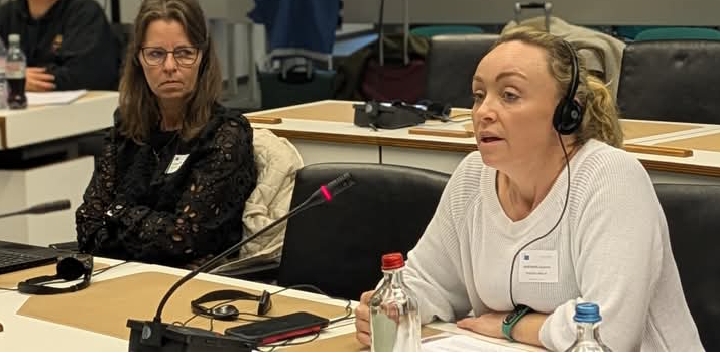
On 29–30 October, the ETF Women’s Committee gathered in Brussels to discuss key challenges facing women transport workers and to elect new members to its Steering Committee.
Emilie Munch Ohlsen (Dansk Metal, Denmark) joined as a new member, while Donna McClaskey (Unite the Union, UK) was confirmed in her role.
A central debate with ETUC Deputy General Secretary Isabelle Schömann reaffirmed that equal pay for equal work of equal value is non-negotiable.
The Pay Transparency Directive must be fully transposed and not weakened under the guise of “deregulation.” Violence and harassment at work were also in focus .
The ETF called for an urgent revision of the outdated 2007 framework agreement and underlined that violence must not be part of the job.
The Committee agreed that its 2026 work programme will prioritise the fight against violence and harassment in the transport sector.

Preliminary findings from ETF’s ongoing survey show that 74% of women transport workers have experienced violence or harassment at work.
The Committee also discussed countering far-right attacks on women’s rights, defending abortion rights, and building on the success of the “Women in Rail” agreement to advance gender equality across all transport sectors.
Petroleum Ministry, NUPRC, NNPC, Oppose Creation Of Decommissioning and Abandonment Commission
.Creating New Agency Will Scare Off Investors, Say Lokpobiri, Komolafe
The Ministry of Petroleum Resources, the Nigerian Upstream Petroleum Regulatory Commission (NUPRC) and the Nigerian National Petroleum Company Limited (NNPC) have jointly opposed the bill to establish the National Commission for the Decommissioning of Oil and Gas Installations (NC-DOGI), 2024.
The position was delivered at a public hearing organised by the House of Representatives Committee on Petroleum Resources (Upstream).
In his presentation, the Commission Chief Executive (CCE) of the NUPRC, Engr. Gbenga Komolafe said creating a different Commission to handle decommissioning and abandonment is not in alignment with global best practices, where decommissioning and abandonment is domiciled with the upstream regulator.
Comments are closed.