

By Roland Ekama
Operators in Nigeria’s e-hailing sector have called on the federal government to subsidise Compressed Natural Gas (CNG), warning that the continuous rise in petroleum pump prices will cripple businesses across the transportation value chain.
They lamented that Uber’s recent exit from Nigeria sent the wrong signal about the health of the nation’s economy and could trigger further job losses in the near future.
According to them, the best way out of the current quagmire is to support operators by subsidising CNG as an alternative fuel.
A cross-section of operators who spoke with DAILY FOCUS NIGERIA recently expressed frustration over the downturn in the business, stressing that what was once a thriving livelihood has become “a no-go area” for new entrants because of the lull induced by fuel price hikes.
Speaking with a frontline e-hailing operator, Mr Olasupo Razak Aliu, said Uber’s exit from Nigeria was not surprising given the non-profitable conditions recorded by many operators.
Aliu maintained that Uber’s withdrawal from the Nigerian market was long overdue, adding that the harsh economic situation would continue to kill the business if urgent interventions were not made.
“If the government can give us CNG at a cheaper price, it will help us to break even. CNG is the solution to this harsh condition we find ourselves in,” he stated.

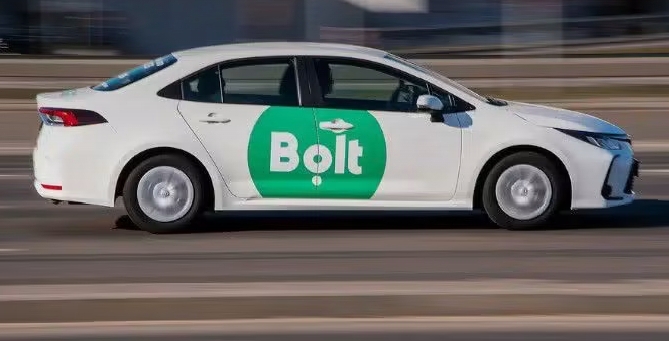
“Operators of e-hailing are handicapped because of the price of fuel. In the nearest future, if the government fails to support and provide a level playing field for us, then I can tell you that other e-hailing operators like inDrive, Bolt and others will fizzle out naturally,” Aliu lamented.
Additional background (six paragraphs)
Uber’s exit from Nigeria on 2 September 2026, after 12 years of operation, has intensified concerns over the sustainability of app-based mobility in Africa’s largest economy.
The company cited a global restructuring and a shift in investment priorities, including towards autonomous vehicles, as reasons for winding down operations in Nigeria and Uganda, but local stakeholders have linked the decision to soaring operating costs, a devalued naira and the removal of the petrol subsidy under President Bola Tinubu’s reforms.
The ride-hailing market in Nigeria, estimated at about $450 million, now hinges on fewer major platforms, with Bolt and inDrive positioned to absorb displaced drivers and riders.
However, drivers warn that reduced competition could expose them to higher commission rates and weaker incentives, compounding pressures from fuel costs, vehicle maintenance and loan repayments for cars acquired through platform-linked financing schemes such as Moove.
CNG has emerged as a key policy focus for reducing transport costs and emissions in Nigeria, with the federal government promoting conversion kits and CNG stations as part of its broader energy-transition and cost-of-living measures. Yet adoption among e-hailing operators remains limited by high upfront conversion costs, uneven station coverage, and uncertainty over long-term pricing, especially as the government balances subsidy removal with targeted support for critical sectors.
The Amalgamated Union of App-Based Transport Workers of Nigeria and other driver groups have repeatedly flagged the risk of loan defaults and asset repossessions if earnings continue to decline. Many drivers who depend solely or primarily on Uber now face an urgent need to migrate to other platforms, even as those platforms contend with the same macroeconomic headwinds that forced Uber’s exit.
Beyond immediate income concerns, Uber’s withdrawal has exposed structural gaps in Nigeria’s transport and regulatory environment, including weak consumer protections, inconsistent airport access rules for e-hailing cars, and limited coordination between federal and state authorities on mobility policy. Analysts argue that without deliberate interventions such as temporary fuel or CNG subsidies, clearer regulatory frameworks, and support for platform competition , the sector risks further consolidation and reduced service quality for commuters.
In this context, the operators’ appeal for CNG subsidies is both a survival strategy and a policy test for the Tinubu administration’s economic reform agenda. If the government can stabilise fuel costs for commercial transport through targeted CNG support, it may preserve jobs, sustain the $450 million e-hailing market, and signal that Nigeria remains viable for digital mobility investors despite current macro-economic turbulence.