

This week the Nigerian Red Cross Society (NRCS), as part of its efforts to raise awareness about flooding, engaged members of riverine communities on how to prepare for floods and stay safe. Flood‑prone communities were also reminded of the importance of remaining alert. Roland Ekama writes.
Makoko a suburb of Lagos State hums with music and purpose as volunteers from the Nigerian Red Cross Society NRCS move door to door, turning an age‑old Lagos alley into a corridor of preparedness.
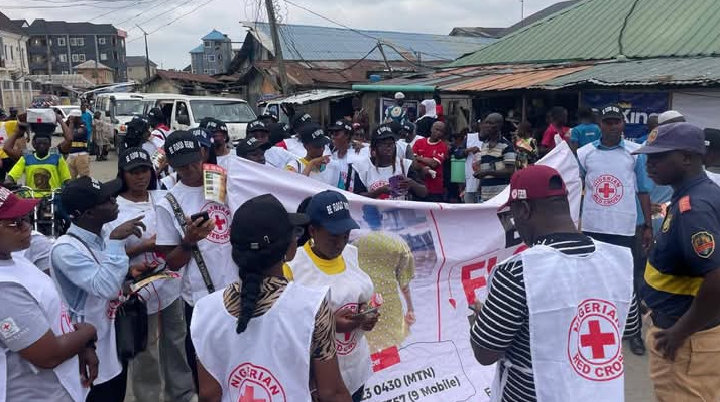
On Tuesday, 18 August 2026, the community—long familiar with seasonal high waters—became the stage for a flood sensitisation roadshow funded by the International Federation of Red Cross and Red Crescent Societies (IFRC) under the DREF Flood Intervention.
Led by NRCS Branch Secretary Olakunle Lasisi and Disaster Management Officer Ige Oladimeji, the team mixed practical advice with local energy. “Early warning and early action save lives,” the volunteers told residents, distributing flyers and talking through simple steps families can take when heavy rains threaten.
Music and conversation softened the message but sharpened attention, helping tens of volunteers break through the daily bustle and reach households that often fall outside formal safety nets.

The roadshow did more than hand out leaflets. It generated conversations—about where families would move, which belongings to lift off the floor, and how neighbours could check on each other during a storm. Community leaders joined the teams, lending credibility and ensuring the messages fit local realities. Their presence signalled that preparedness is a shared responsibility, not just a checklist for outsiders.
A linked effort the day before focused on prevention through action. On Monday, 17 August, NRCS volunteers joined residents, government partners and the Lagos State Ministry of the Environment for community clean‑ups in Makoko, Erejuwa‑Abiodun and Ikota. Administrative Officer Nicholas Adeshile and Disaster Management Officer Oladimeji coordinated teams in Eti‑Osa and Lagos Mainland, while the Office of Drainage Services deployed its EFAD unit to clear blocked channels.
Volunteers swept streets, removed refuse and helped reopen drainage paths—small acts that reduce the risk of floodwaters compounding into disaster.
NEMA’s Lagos office visited Makoko during the roadshow to assess local conditions and explore longer‑term solutions, underscoring the value of coordination between humanitarian responders, government and communities.
Together, the awareness campaign and clean‑ups illustrate a simple truth: flood preparedness begins before the water rises. By combining outreach, environmental sanitation and local leadership, the Nigerian Red Cross Society and its partners are helping residents turn knowledge into action—and building resilience one household at a time.
Awareness. Preparedness. Early action. For Makoko and communities across Lagos, these are more than slogans; they are the daily work of staying safe when the rains come.