

Apapa Command Turnaround: How Comptroller Oshoba Is Shutting Down Drug Smuggling At Nigeria’s Busiest Port
By Roland Ekama
They call it “Canadian Loud” — a high-potency strain of cannabis that transnational smugglers try to slip through busy ports in cleverly concealed consignments. Over the past six months, Apapa Port has seen those attempts meet a different fate: targeted, intelligence-led operations that have turned the port from a soft spot into a fortified checkpoint.
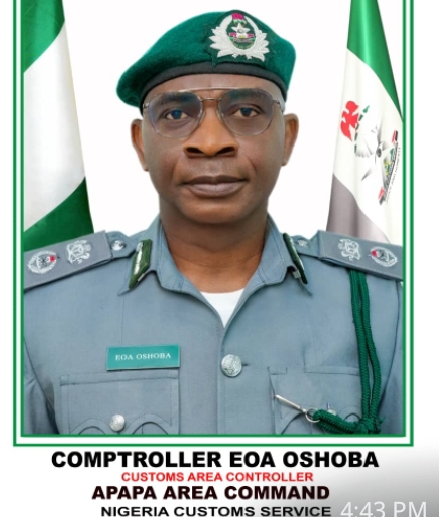
These shift reflects an active implementation of the Comptroller-General of Customs’ (CGC) Adewale Adeniyi policy thrust which focus on consolidation, innovation and collaboration — and has been driven on the ground by Comptroller Emmanuel Oshoba and his Apapa Area Command team.
The CGC set the strategic direction: consolidate institutions and information, deploy innovative technology and tactics, and deepen partnerships across government and industry. Under that mandate, Apapa Command has turned intelligence into action
Under the leadership of Comptroller Emmanuel Oshoba, the Nigeria Customs Service (NCS), Apapa Area Command, in close collaboration with enforcement partners, has intercepted multiple large consignments of illicit drugs and other harmful imports, signaling a systematic crackdown on smuggling networks.
Comptroller Oshoba’s leadership reflects and reinforces the CGC’s broader mandate. He has emphasized discipline, professionalism and zero tolerance in command briefings and parades, while insisting that officers respect the twin priorities of facilitating legitimate commerce and protecting national security.
The most recent discovery came when customs officers inspected an imported vehicle consignment and found 347.5 kilograms of Canadian Loud packed into 13 bags hidden inside a Toyota Sienna. That seizure followed a larger operation on 15 June 2026, when officers intercepted a 40-foot container carrying a black Toyota vehicle loaded with 3,639 half-kilogram sachets — approximately 1.81 tonnes — of the same drug. Both consignments returned positive field tests for Cannabis sativa. These successes mark the fourth major joint interception involving Apapa Customs within six months and reflect a clear shift toward proactive, data-driven enforcement.

Three factors explain the command’s improved effectiveness: enhanced intelligence, technology adoption, and leadership that enforces accountability without compromising trade facilitation.
Intelligence-led targeting
Prevention now begins well before containers arrive at Apapa’s gates. The command has strengthened intelligence collection and analysis to create precise risk profiles. Analysts monitor trade patterns, flag suspicious shipper histories, and scrutinize manifest irregularities. This information is shared rapidly across enforcement teams, enabling officers to prioritize inspections on consignments most likely to conceal illicit cargo.
The command has also expanded liaison with shipping lines, freight forwarders and terminal operators, creating an early-warning network that flags questionable consignments at manifestation. These collaborations reduce wasted resources and let officers focus attention where the data indicate the highest risk.
Technology and tactical search

Data-driven leads are amplified by technology. Apapa Command announced the planned deployment of a high-capacity drive-through scanner capable of processing up to 200 containers per hour. While full deployment is pending, the command already uses a mix of scanners, mobile x-ray units and thorough physical examinations to catch concealed loads.
Smugglers frequently employ vehicles placed inside containers to hide drugs. In multiple instances, drugs were found within cars — a concealment method officers now expect. The command’s layered inspection protocols include routine stripping and physical checks of vehicles when risk indicators are present. These tactical changes turned up both the 347.5kg seizure and the larger 1.81-tonne haul.
Inter-agency coordination.
Although the customs command leads the operational posture at Apapa, the mission depends on seamless coordination with partner agencies. Joint task teams combine customs’ trade screening capabilities with partner enforcement expertise to streamline arrests, evidence handling and prosecution. The integrated structure reduces operational gaps that smugglers once exploited, ensuring that interdictions translate into legal action and deterrence.
Comptroller Oshoba and enforcement partners have received recognition for this strengthened cooperation. The recent awards of World Customs Organisation Certificates of Merit to key personnel reflect improved institutional collaboration that now operates as routine practice rather than an occasional effort.
Leadership, discipline and culture
Leadership has been the catalyst for change. Comptroller Oshoba has emphasized discipline, professionalism and zero tolerance for smuggling in every command briefing and monthly parade. He has balanced the twin priorities of facilitating legitimate trade and protecting national security, insisting that officers perform thorough checks without creating unnecessary delays for compliant consignments.
To reinforce these expectations, Oshoba introduced recognition programs that reward outstanding performance in revenue collection, enforcement and stakeholder engagement. The awards aim to institutionalize a culture where diligence and integrity are recognized rather than sidelined — a shift officers say has improved morale and compliance.
Protecting public health and the economy
Apapa’s enforcement scope goes beyond narcotics. Intelligence-led searches recently uncovered two 40-foot containers of expired pharmaceuticals intended for relabelling and re-entry into the market. The combined Duty Paid Value (DPV) of seized consignments, including narcotics and pharmaceuticals, was estimated at over ₦12.7 billion — a stark indicator of the scale and potential harm of attempted imports.
“These seizures protect hospitals, pharmacies and consumers,” Oshoba said, stressing that those who traffic expired medicines or illicit substances threaten national progress. The command’s operations therefore serve multiple public interests: preventing crime, safeguarding public health, and protecting economic integrity.
Results and next steps
The results are tangible: multiple high-volume seizures, faster identification of risky consignments, and an operational posture that leverages data, technology and disciplined personnel. Apapa Port is shifting from a vulnerability into a model of enforcement effectiveness.
Planned technology rollouts, notably the drive-through scanner, will increase inspection throughput while reducing bottlenecks, allowing the command to inspect more containers without slowing legitimate trade. The command will also continue to deepen relationships with stakeholders so that legitimate operators experience smooth processing even as smugglers encounter higher detection risks.
Comptroller Oshoba has been clear: Apapa Port will not be a conduit for economic sabotage or threats to public health. “We have the intelligence, the technology and the resolve to identify and apprehend them,” he said. “Anyone contemplating these criminal acts should immediately desist, because the consequences will be swift, decisive and uncompromising.”
If the command sustains this model — combining targeted intelligence, technological investment and disciplined leadership — Apapa could become a blueprint for other regional ports facing similar threats. The message to smugglers is already evident: the days of easy exploitation are over.