

IMO Assembly Adopts New Capacity Development Strategy
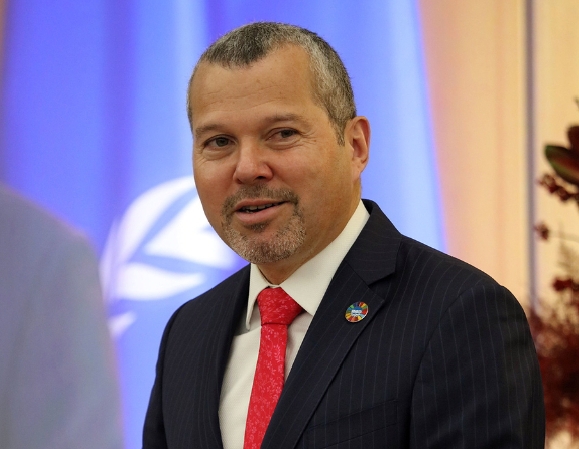
The 34th session of the Assembly of the International Maritime Organization (IMO) concluded in London with the adoption of a new strategy to strengthen Member State compliance with IMO rules, by expanding capacity-development support.
The Capacity Development Strategy was among 22 resolutions adopted by the Assembly, including decisions on the Organization’s budget, financial statements, work programme and strategic plan, among others.
According to a statement, the Assembly also elected a new Council to serve for the 2026–2027 biennium.
Concluding the meeting, which ran from 24 November to 3 December, IMO Secretary-General Mr. Arsenio Dominguez said:
“Everything placed before this Assembly has been achieved, adopted, or approved. You have turned ideas into action and transformed collective ambition into concrete outcomes. Your decisions this week have strengthened the governance and strategic direction of IMO.”
On Capacity Development Strategy , the
IMO has established a streamlined framework to support all Member States – particularly Small Island Developing States (SIDS) and Least Developed Countries (LDCs) – in implementing IMO regulations through strengthened national maritime policies and strategies that boost economic growth while protecting the marine environment and promoting sustainable shipping.
Approved earlier this year by the Technical Cooperation Committee (TC 75), the Strategy aims to: Improve effective implementation of IMO instruments
Expand the suite of capacity-development offerings
Enhance international and regional cooperation and partnerships
Improve effective management, coordination and delivery of capacity development and technical cooperation
Secure and mobilize sustainable funding and resourcing
Revised Strategic Plan
The Assembly adopted the revised Strategic Plan for the six-year period 2024 to 2029, including the mission statement, vision statement, overarching principles and strategic directions and updates to the 2026-2027 work programme of IMO organs and the table of performance indicators. There are eight strategic directions:

SD 1: Ensure implementation of IMO instruments supported by capacity development
SD 2: Integrate new, emerging and advancing technologies in the regulatory framework
SD 3: Respond to climate change and reduce greenhouse gas emissions from international shipping
SD 4: Continue to engage in ocean governance
SD 5: Enhance global facilitation, supply chain resilience and security of international trade
SD 6: Address the human element
SD 7: Ensure the regulatory effectiveness of international shipping
SD 8: Ensure organizational effectiveness
The Assembly further adopted a uniform approach for the application of the Strategic Plan by all IMO organs, with the aim of strengthening planning and reporting procedures to enhance delivery and efficiency.
Results-based budget and work programme
The Assembly adopted the Organization’s budget and work programme for 2026 and 2027. The budget for the 2026-2027 biennium is set at £87,427,000, comprising an appropriation of £43,367,000 for 2026 and an appropriation of £44,060,000 for 2027.
This budget will be financed by contributions of Member States amounting to £76,835,000, comprising of £38,081,000 for 2026 and £38,754,000 for 2027.
Election of members of the IMO Council
A new 40-Member IMO Council for the 2026-2027 biennium was elected on Friday, 28 November.
The newly elected Council met on 3 December for the Council’s 136th session, immediately after the conclusion of Assembly, and re-elected Mr. Victor Jiménez (Spain) as its Chair, and Mrs. Amane Fethallah (Morocco) as Vice-Chair.
Other decisions
The Assembly adopted a number of key resolutions, including on the Framework and Procedures for the second cycle of the IMO Member State Audit Scheme, an Integrated IMO Identification Number Scheme, and agreed to introduce Arabic as a working language of the Assembly.
Comments are closed.