

EHINGBETI : Stakeholders Make Case For Neglected Coastal Communities Over Blue Economy Boom
By Roland Ekama
Stakeholders in Lagos and maritime industry have exposed how the failure to invest in coastal communities threatens to derail Nigeria’s Blue Economy promises, risking deepening poverty in such areas .
The stakeholders said while foreign models like Singapore, Philippines littoral communities surge ahead with inclusive maritime growth, Nigeria coastal communities and the indigenous people of such areas are wallowing in poverty despite the huge volume of international trade.
Speaking on Tuesday October 28, 2025, in Lagos, Major General Tajudeen Olanrewaju (Rtd), a former Minister of Communications, sounded a stark warning at the 3rd Ehingbeti Blue Economy Hub: noted that Nigeria’s indigenous coastal communities remain sidelined and impoverished despite the country’s burgeoning maritime wealth.
The Retired General slammed the persistent neglect of these communities home to valuable local knowledge and manpower crucial for securing and developing the Blue Economy.
He condemned policies that exclude locals from economic gains, urging urgent reforms that prioritize inclusivity and poverty alleviation.
Highlighting the rich history of the Ehingbeti era, when coastal commerce thrived and powered Lagos’ prosperity, he stressed that today’s potential remains unrealized because indigenous voices are systematically ignored.
The General further voiced concern over the disenfranchisement of indigenous communities in coastal areas, stressing the need for government intervention to cater for the people as part of efforts to better the future of people living in those communities.
Olanrewaju who chaired the event, noted that key objective of the forum was to advance an inclusive, people-centered approach to Lagos’ coastal development within the Blue Economy framework.
The Chairman urged industry experts, business leaders, policymakers, and other stakeholders to probe the concept, components, and values of Ehingbeti to inform policy formulation and implementation aligned with local realities.
Apparently commending the organizers for linking ocean and maritime management with Lagos’ historical development., the General defined the Blue Economy as the sustainable use of ocean resources to drive economic growth, improve livelihoods, and create jobs while protecting ocean health.
According to him, the points raised recounted the Ehingbeti era, describing it as a period of prosperity that positioned Lagos at the forefront of socio-economic and political relevance in West Africa under British colonial rule.
He further highlighted how water-based trades in food, arts and crafts, textiles, liquors, gold, and other resources thrived along the waterways, with commerce on sea serving as a backbone of the city’s economy.
“Ehingbeti was described as a stretch from Apongbon to Marina, Iru Creek, Onikan, and extending to the Lekki corridor, with connections extending along the Atlantic coast from Malabo to Banjul.
“A central call was for the inclusion of indigenous communities in all maritime initiatives. The indigenous groups, he argued, bring valuable contributions in security, manpower, and local intelligence, and their ownership of projects would safeguard investments while boosting local economies.Despite abundant maritime wealth, he noted, adding that coastal populations near ports have remained under-integrated, experiencing poverty due to policy gaps and a failure to integrate local skills into the Blue Economy.
The elder State man urged a policy shift toward a truly global Blue Economy that harnesses local potentials.In closing, he suggested that Nigeria’s maritime commerce could achieve economic sovereignty through policy changes and by learning from global exemplars such as Singapore, India, and Washington, D.C.

He emphasized that true inclusivity hinges on sound policy, motivation, and targeted training for SMEs within maritime administration.
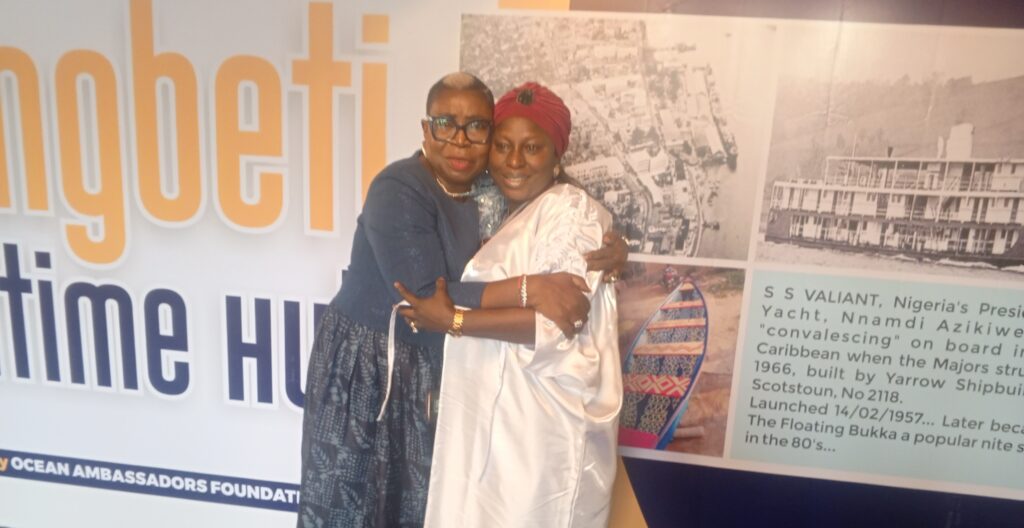
On her part convener of the 3rd Ehingbeti Blue Economy Hub, Mrs Violet Claitan Williams advocated for sustainable development, that marks a significant milestone in our collective pursuit of harnessing the vast potential of our ocean resources in a sustainable and inclusive manner.
“I would like to express my deepest appreciation to our esteemed Chairman of the occasion, Special Guest of Honor, Guest of Honor, Father of the day, Keynote Speaker, Royal Father of the day, and all distinguished guests for honoring us with your presence.
*Your contributions to this gathering are invaluable, and we are honoured to have you share your expertise and insights with us.
“As we gather here today, we do so with a deep sense of purpose and commitment to the development of our coastal communities.
“The theme of this year’s hub, “The Renaissance of Ehingbeti in Community Engagement and Inclusivity.” underscores the importance of engaging our coastal communities in the policy creation and implementation process over the past two editions, we have drawn valuable lessons from our history and heritage, and we have made significant strides in promoting the blue economy concept,”William stressed .
Speaking further she reiterated that”The production of a well-received audio-visual documentary and a book on the historical significance of Ehingbeti within the contemporary blue economy are testaments to our commitment to this cause.”
The convener of the event, echoed the call for sustainable development that actively involves coastal residents rather than leaving them behind.
She issued a rallying cry for shared responsibility among government, industry, and civil society to unlock true economic sovereignty by integrating indigenous expertise into maritime policy and projects.
Williams said “As we move forward, we are delighted to have our erudite professor of political science share his thoughts on a critical topic that has far-reaching implications for our coastal communities. The keynote paper, “Unpacking the Potentials of Inland Waterways in the Blue Economy,” promises to be a thought-provoking and insightful exploration of the opportunities and challenges that lie ahead.
“We believe that the discussions and deliberations that will ensue over the course of today will provide valuable insights and recommendations that will inform policy decisions and promote inclusive development.
“At the Ocean Ambassadors Foundation, we firmly believe that the development of our coastal communities is a collective responsibility that requires the active participation of all stakeholders.
“We cannot afford to leave the government alone in this endeavour. All hands must be on deck to develop the wealth of our coastal communities and ensure that the benefits of the blue economy are equitably distributed. I have no doubt that together, we can achieve great things and create a brighter future for ourselves and for generations to come,”she stated.
Similarly, Lagos Area Manager , National Inland Waterways Authority (NIWA), Engineer Sarat Buraimoh ,called on stakeholders to support the growth and development of the blue economy.
She commended the President,Bola Ahmed Tinubu for the establishment of the Marine and Blue Economy ministry, stressing that it will be the game changer of the nation’s economy.
A senior Advocate of Nigeria (SAN), Mrs Jean Chiazor Anishere advocated for the creation of Ehingbeti water transportation service .
Anishere called on stakeholders to support the initiative, which according to her , will serve as a footprint for the indigenous people living in coastal communities.
Comments are closed.