

Delay In Cargo Clearance Prompts Shippers Council Workshop On Maritime Police’s Strategic Role In Port Efficiency
By Roland Ekama
The persistent delays in cargo clearance at Nigerian seaports, with an average dwell time of 21 days compared to just 6 hours in Singapore and 7 days in Lome, have continued to negatively impact the ease of doing business and increase costs for stakeholders.
This situation has triggered collaborative efforts by the Nigerian Shippers’ Council (NSC) and the Nigeria Police Maritime Command to enhance port efficiency and address human factors causing delays.
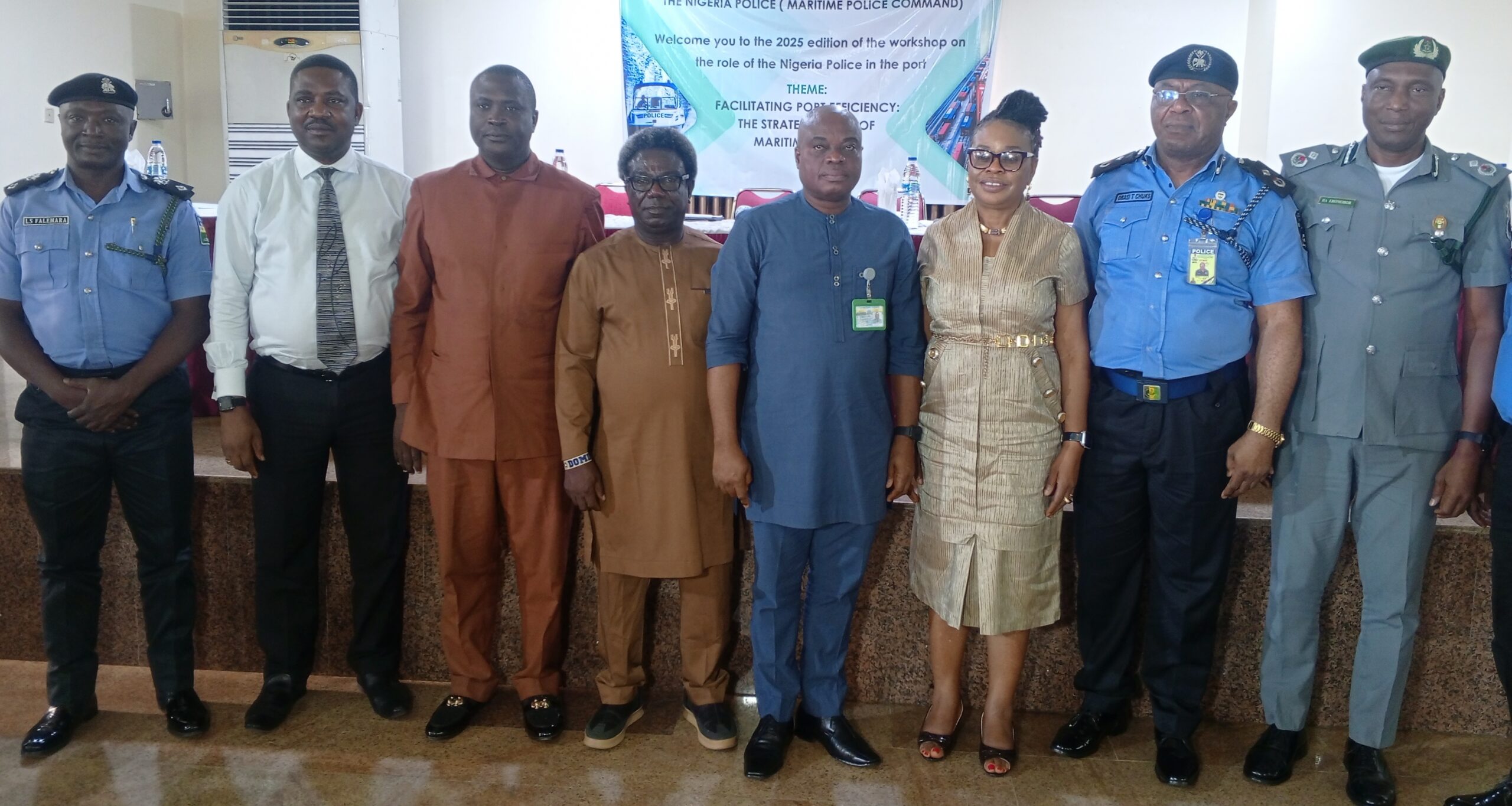
In a workshop held Wednesday, November 19, 2025, Apapa Lagos, tagged “Facilitating Port Efficiency: The Strategic Role of the Police, the Executive Secretary/CEO of NSC , Dr. Pius Akutah emphasized the strategic role of the Maritime Police in facilitating trade and mitigating interference in cargo clearance processes.
Highlighting the collaboration between NSC and the Maritime Police Command since the Council’s appointment as Port Economic Regulator, the workshop aimed to build capacity among police officers to understand and effectively administer their statutory roles within the maritime environment.
The Executive Secretary who was represented by Mrs. Margaret Ogbonnah
Director, Regulatory Services Department
Nigerian Shippers’ Council , noted that despite government efforts to reduce cargo dwell time, human-induced disruptions like unsolicited detention orders on cleared cargoes and intimidation at port terminals have persisted.
These practices, Akutah stressed , often carried out without the knowledge of senior police officials, hamper cargo flow and escalate costs through extended demurrage and storage charges.
He said ”Following robust engagements with the Inspector General of Police, measures have been put in place to streamline police operations at ports, including directives to disregard unauthorized correspondence related to container detentions.
“The current focus is on comprehensive capacity building for maritime police officers to align their operations with international best practices and support Nigeria’s port competitiveness.

The workshop concluded with appreciation for all involved in the training program’s organization and a call for continued efforts to enhance port efficiency and reduce cargo clearance time, which will ultimately lower the cost of doing business in Nigerian ports and improve the nation’s global trade standing.
In his welcome address AIG Maritime Police Command,Chinedu Oko commended Council’s consistent commitment to strengthening institutional collaboration, enhancing operational standards, and supporting law enforcement capacity within the maritime domain.
AIG Oko who was represented by DCP Chukwuemeka Obasi, pointed out that the training is both timely and strategic, adding that “we are reminded that modern port security goes far beyond policing in the traditional sense”.
“The efficiency of our ports (both Western and Eastern Commands) depends significantly on how effectively law enforcement interfaces with port operators, regulatory agencies, terminal managers, freight forwarders, shipping lines, and the wider supply-chain community.
“The Maritime Police, as a specialised arm of the Nigeria Police Force, plays a critical role in securing maritime assets, mitigating threats, combating cargo-related crimes, preventing pilferage and vandalism, and ensuring the smooth flow of legitimate trade.
“Our mandate is not just to enforce the law but also to protect the economic lifeblood of our nation. Nigeria’s competitiveness in the global maritime economy is influenced greatly by the level of safety, predictability, and confidence that stakeholders experience at our ports.
“This is why continuous training is essential. The operational landscape is evolving, new technologies, changing criminal patterns, multimodal logistics, and international compliance requirements all demand that our officers become smarter, more proactive, better informed, and better equipped. Through this programme, participants will gain valuable insights into modern port operations, cargo handling procedures, supply-chain vulnerabilities, and best practices for promoting trade facilitation while maintaining robust security.”he noted.
He also urged officers participating in the training, to take full advantage of the knowledge being offered calling on them to engage actively, ask questions, and apply the lessons in their daily assignments.
The AIG emphasized that the Nigerian Shippers’ Council remains one of the most important partners in fostering a secure and efficient port environment, pointing out that “We deeply value the collaboration between our institutions, and we look forward to strengthening this partnership to ensure that our ports operate at global standards.
Comments are closed.