

The African Union has commenced an assessment of the national response level and implementation status of the recommendations of the AU High Level Panel on Illicit Financial Flows (IFFs) in 13 out of the 55 African countries.
The countries are Nigeria, Algeria, Burkina Faso, Democratic Republic of Congo, Ghana, Lesotho, Malawi, Mauritius, Namibia, South Africa, Sudan, Tanzania and Tunisia. The assessment will cover all African countries.
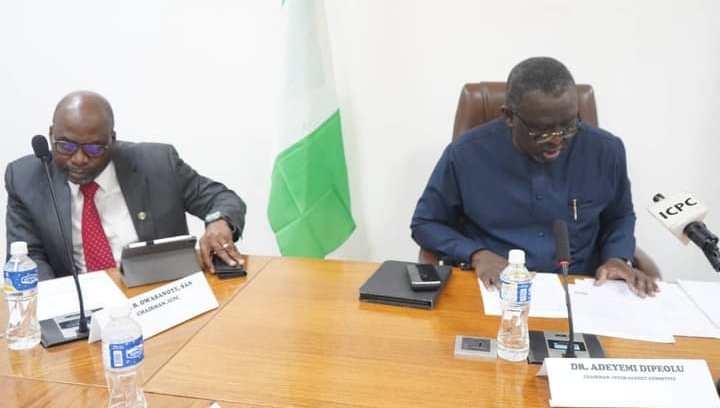
According to a statement from the commission, the Senior Adviser to the AU High Level Panel on IFFs from Africa, Ambassador Maxwell Mkwezalamba and the Head of Secretariat of the AU High Level Panel on IFFs from Africa, Ms. Souad Aden-Osman, made this known at a technical validation workshop held at the headquarters of the Independent Corrupt Practices and Other Related Offences Commission (ICPC) in Abuja on Tuesday.
The technical validation workshop was convened by the ICPC in collaboration with the Inter-Agency Committee on Stopping Illicit Financial Flows from Nigeria and the Coalition for Dialogue on Africa (CoDA).
Ambassador Mkwezalamba disclosed that the national assessment reports would cover the state of IFFs from African countries, and ongoing efforts of African governments to reduce IFFs, in line with the 24th AU Assembly decisions on IFFs from Africa.
He further noted that the assessment reports would form the annual report of the Chair of the AU-HLP to the African Union Commission, as well as provide baseline information to guide the design of possible interventions aimed at strengthening the capacities of AU member states to combat illicit financial flows and mobilize domestic revenues.
“The reports to be prepared include: country consolidated responses, in line with the recommendations/decisions of the AU-HLP; a synthesis report covering, among others, main IFF risks, whether the 2015 AU Assembly Decisions on IFFs from Africa have been adopted, whether there is a mechanism to coordinate the state institutions involved in combating IFFs and its effectiveness, and the capacity needs of the institutions involved in combating IFFs; and a full report describing the wider economic context impacting on the country’s IFF risk exposure, determining the IFF channels and the scale of the outflows through the various channels, and assessing the country’s exposure to tax havens and the state of implementation of the 24th AU Assembly decisions on IFFs from Africa,” the AU HLP Special Adviser stated.

The Head of Secretariat of the AU HLP on IFFs from Africa, Ms. Souad Aden-Osman, expounded that the assessment was the second phase of the panel’s work and would focus on national level actions by African Member States.
She assured that the Secretariat of the AU- High Level Panel would support the efforts of the Inter-Agency Committee on Stopping Illicit Financial Flows from Nigeria and African countries to ensure timely finalization of the response matrix and synthesis report, as well as the preparation of the final report.
On the inauguration of a Technical Committee on Domestic Resource Mobilization, Aden-Osman said it would boost the capacity of African governments to adopt and implement efficient fiscal policies as the basis for better resource mobilization.
“This will boost African Governments’ capacities to adopt and implement efficient fiscal policies as the basis for better revenue collection, public expenditure management, and debt management,” she added.
Earlier in his welcome address, the Chairman of the ICPC, Prof. Bolaji Owasanoye, SAN, OFR, lauded the AU High Level Panel chaired by former South African President, Thabo Mbeki, for placing IFFs on the global agenda as well as the inclusion of IFFs in the Sustainable Development Goals (Goal 16 Target 4).
“Today’s event highlights the fact that success in advocacy needs to be matched by continuous research to deepen understanding of the phenomenon of IFFs, its causes, facilitators, and how it can be stemmed. Policy instruments and actions at domestic and international levels are also crucial.
“One key recommendation of the Report of the HLP is that African States should create avenues and mechanisms for information sharing and coordination among the various institutions and agencies of government responsible for preventing IFFs,” said Prof. Owasanoye.