


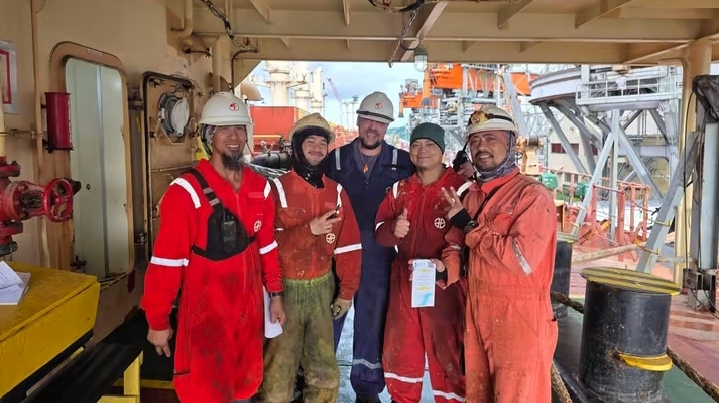
Six months after the outbreak of war between Iran and a US-led coalition, about 6,000 seafarers remain trapped on roughly 400–500 merchant vessels inside the Persian Gulf, unable to pass safely through the Strait of Hormuz, the United Nations’ International Maritime Organization (IMO) has said.
The IMO, which has described the situation as a “dire humanitarian and human rights crisis”, is calling for practical, coordinated solutions to restore freedom of navigation and enable the safe evacuation and repatriation of the stranded crews.
At the height of the crisis in April and May, more than 20,000 seafarers on about 2,000 ships were reported stuck in the Gulf after Iran effectively closed or heavily restricted passage through the strategic waterway following the start of hostilities on 28 February 2026.
By August, that number had fallen to around 6,000 sailors on 400–500 vessels, but many remain unable to leave without their ships and with no clear timeline for safe transit.
IMO Secretary-General Arsenio Dominguez, in a statement marking the six-month mark of the conflict, urged Member States and the shipping industry to work with the UN to “advance practical solutions to restore the freedom of navigation through the Strait.”

He stressed that renewed political will and cooperation are needed to implement a July IMO Council resolution reaffirming the right of transit passage through international straits and to bring traffic back toward pre-war levels of about 135 transits per day.
The agency has also warned that charging tolls for passage through the Strait of Hormuz would be contrary to international law, and that commercial shipping should not attempt to cross until the area is confirmed de-mined and safe.
In June, the IMO launched an operation to evacuate more than 11,000 seafarers from the Gulf, successfully moving about 2,500 sailors on 115 ships in the first days before the effort was suspended following an attack on a commercial vessel, underscoring the risks and lack of guaranteed safe passage.
On board the stranded ships, crews report severe shortages of food, fresh water, medicines and other essentials, along with mounting mental-health strain. Many describe feeling “like being in prison”, with no clear end to the ordeal.
The IMO says at least 20 sailors and dockworkers have been killed in incidents related to the conflict in the region.
As the war drags on, the key question remains how shipping through the Strait of Hormuz a chokepoint for a significant share of the world’s oil and gas trade will be managed in future, and when the thousands of trapped seafarers will finally be able to go home.